Short Term Rentals
Regulatory Framework


A vital voice for our community.
Margherita M.
"
"
Regulatory Insights
Understanding rules shaping short-term rental markets.
EU Short-Term Rental Regulation
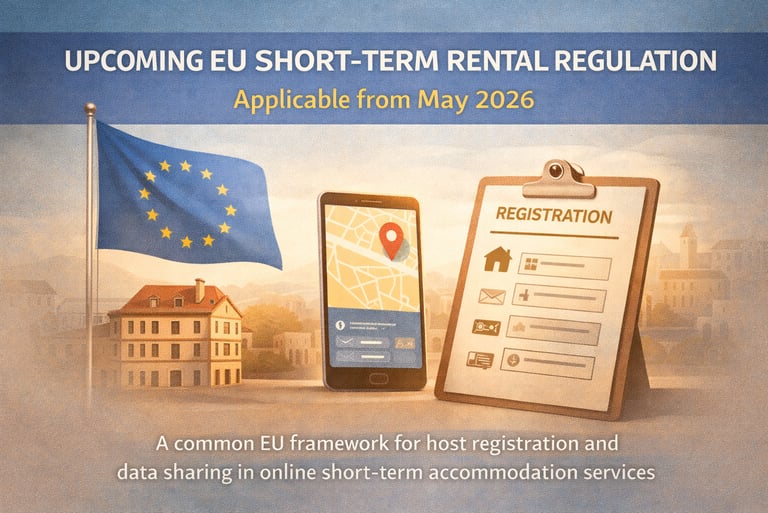
This is the first EU law written specifically for short-term rentals. It creates a common framework for host registration, registration numbers, platform checks, and data-sharing with public authorities. Its main purpose is to improve transparency and enforcement across Member States, while still leaving room for national, regional, and local STR rules. The regulation applies from 20 May 2026.
Services Directive
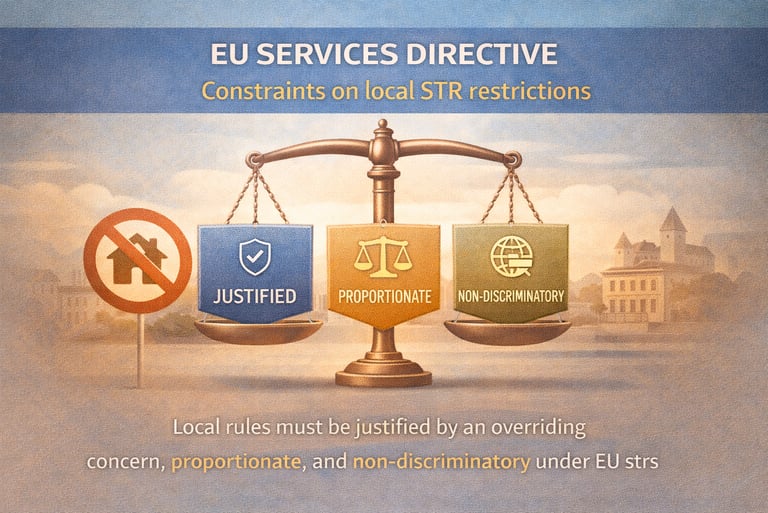
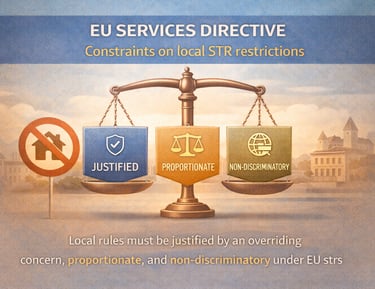
The Services Directive is one of the key EU legal guardrails for local STR regulation. It does not stop cities or Member States from imposing restrictions, but it requires those rules to be justified, proportionate, and non-discriminatory. In practice, this means licensing systems, authorization schemes, or other limits on STRs must be defensible under EU single-market law. The Cali Apartments case confirmed that such rules can be lawful where they genuinely pursue objectives like tackling housing shortages.
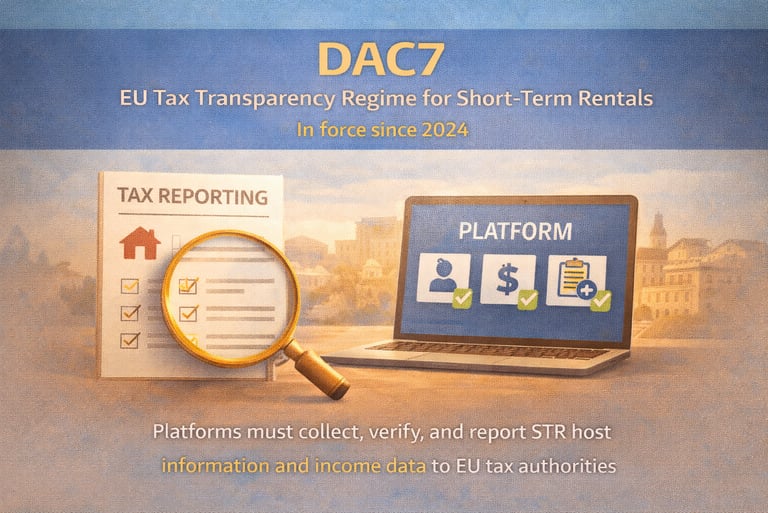
DAC7
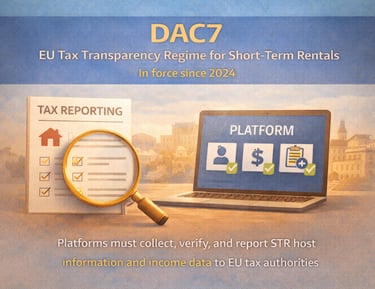
DAC7 is the EU’s tax transparency regime for digital platforms. It requires platforms facilitating activities such as the rental of immovable property to collect, verify, and report information about sellers and hosts to tax authorities. It is not a new tax, but it significantly increases reporting obligations and strengthens tax enforcement around STR income. The first exchange of reported information for the 2023 calendar year took place in February 2024.
Short-term rentals in Europe are no longer shaped by local rules alone. Today, the sector sits at the intersection of EU platform regulation, tax transparency, consumer protection, data privacy, and sustainability law. Together, these initiatives are building the legal framework that will define how STRs operate across Europe in the years ahead.
Digital Services Act (DSA)
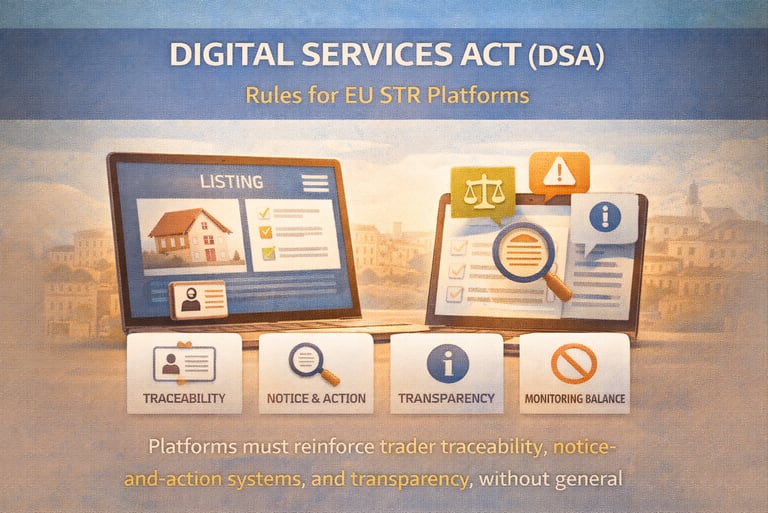
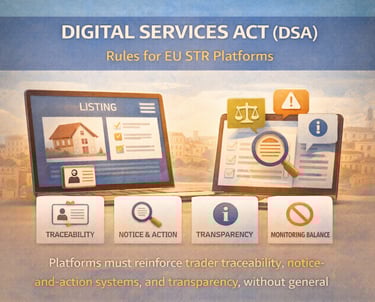
The DSA shapes how online STR platforms operate in the EU. It reinforces rules on platform accountability, transparency, notice-and-action systems, and trader traceability, while also preserving the principle that platforms are not subject to a general monitoring obligation. For short-term rentals, this matters because platforms must do more to structure information responsibly, without being turned into universal policing bodies for every listing.
VAT in the Digital Age (ViDA)
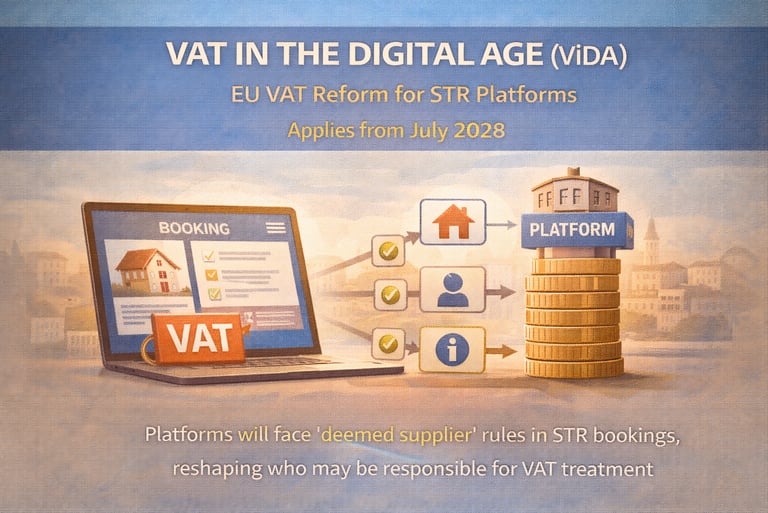
ViDA is a major EU VAT reform with direct consequences for platform-based short-term rentals. Under the package adopted in 2025, new “deemed supplier” measures will apply from 1 July 2028 to platforms active in short-term accommodation rental, changing who may be responsible for collecting and remitting VAT in certain transactions. In practical terms, this reform is set to reshape the VAT treatment of online STR bookings across the EU.
General Data Protection Regulation (GDPR)
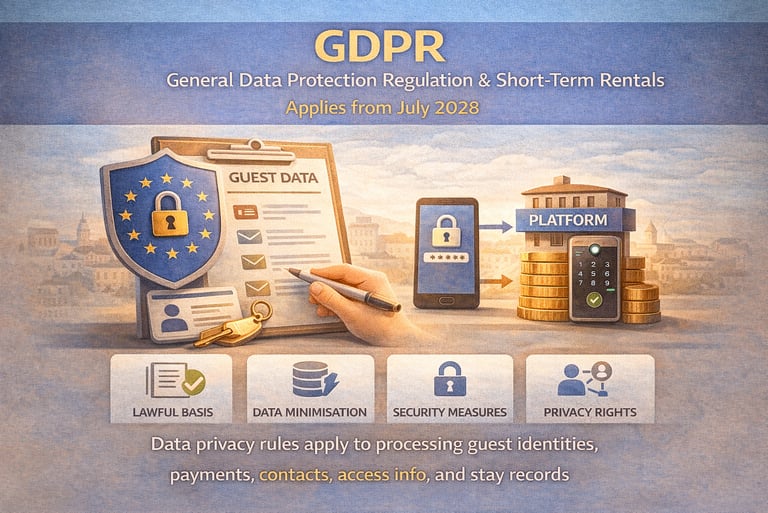
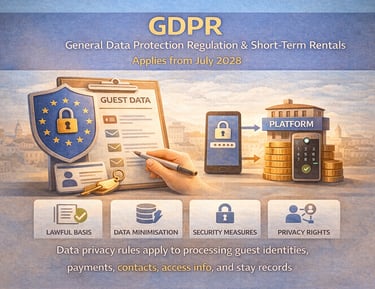
GDPR governs how personal data is collected, used, stored, and shared across the EU. In the STR context, it affects hosts, property managers, and platforms handling guest identities, contact details, payment data, booking records, and access information. It is a core part of the regulatory framework because STR activity today is deeply digital and data-driven.
EU Consumer Protection Rules
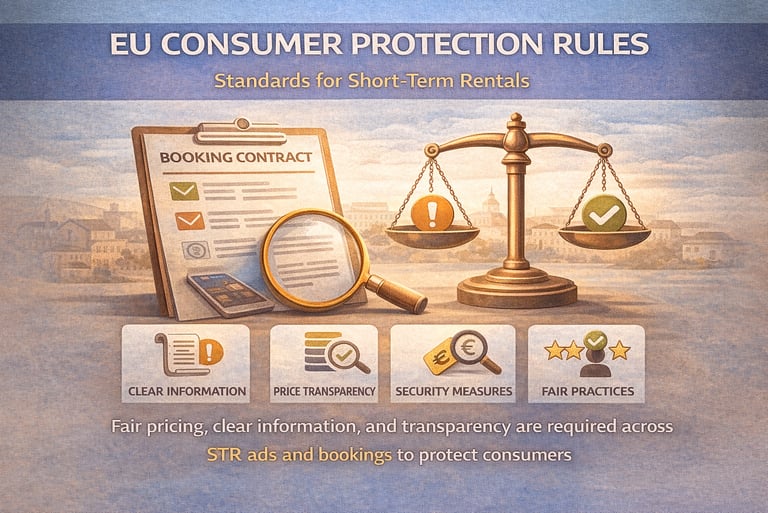
EU consumer law is highly relevant to short-term rentals, especially where bookings are made online. The Consumer Rights Directive and Unfair Commercial Practices Directive require fair information, transparency before purchase, and protection against misleading or unfair practices. For STRs, this affects how listings are presented, what information is given to guests, and how providers communicate pricing, conditions, and service details.
Energy Performance of Buildings Directive
(EPBD)
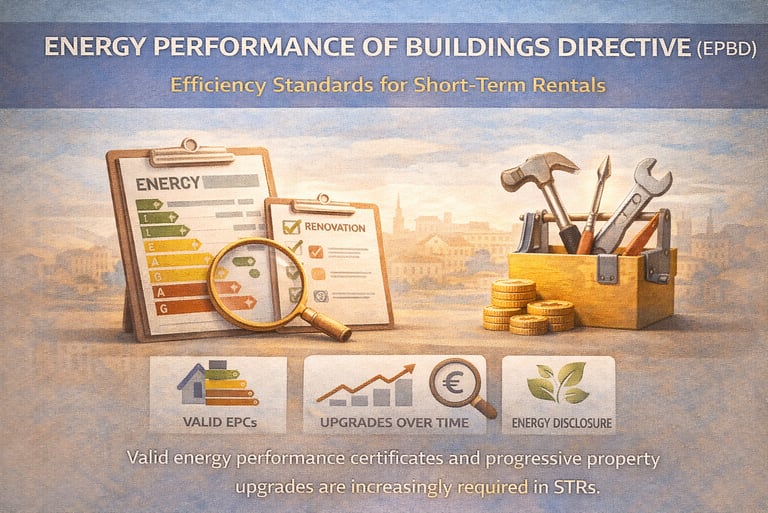
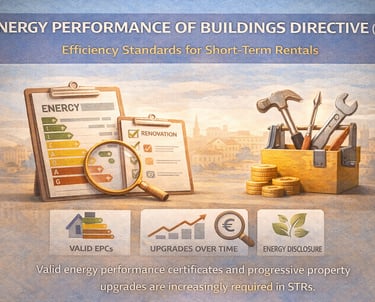
The EPBD is not STR-specific, but it increasingly affects the sector because it raises the importance of energy performance certificates, energy disclosure, and building-renovation standards across the EU. The recast directive, adopted in 2024, strengthens the framework for building efficiency and helps push Member States toward stricter implementation. For short-term rentals, this can influence compliance duties, property presentation, and future upgrade expectations.
National, Regional, and Local STR Rules
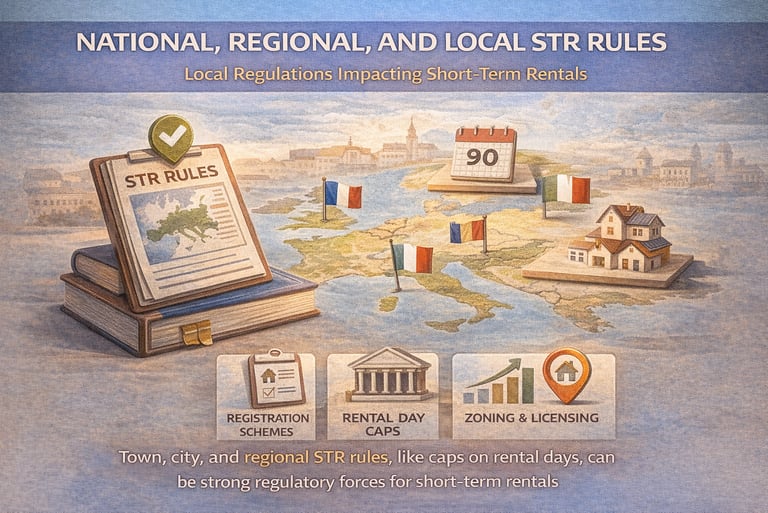
Although not a single EU initiative, this layer is essential to understanding the current framework. In practice, many of the rules that most directly affect STRs, such as registration schemes, caps on rental days, licensing requirements, zoning restrictions, and primary-residence conditions, are adopted at national, regional, or city level. EU law now increasingly shapes the boundaries of those rules, but local regulation remains one of the strongest forces in the sector.
The Wider EU Platform Liability Framework
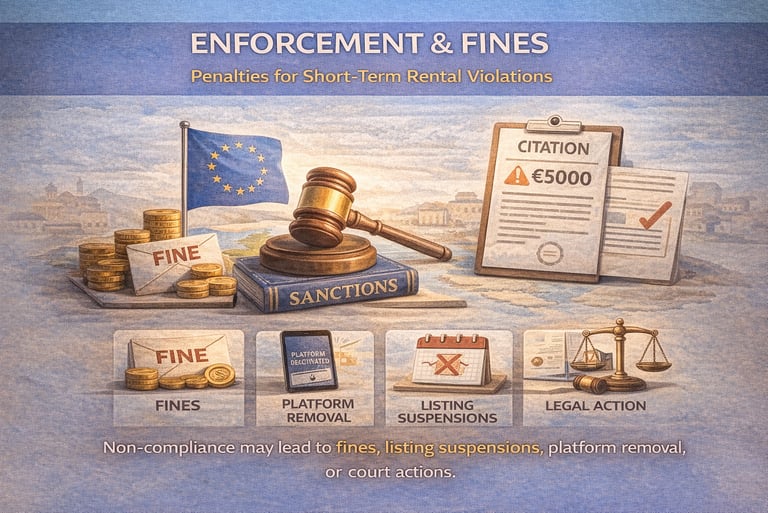
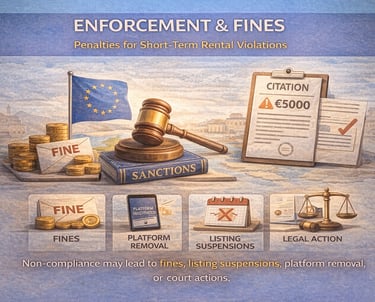
Beyond STR-specific rules, the broader EU framework on intermediary services still matters. The DSA modernised this landscape, but the core logic remains important: platforms have legal responsibilities, yet they are not under a blanket duty to monitor all user activity. This balance continues to shape how regulators, courts, and platforms approach listing legality, enforcement, and accountability in the short-term rental market.